
Why Isn’t My House Selling?
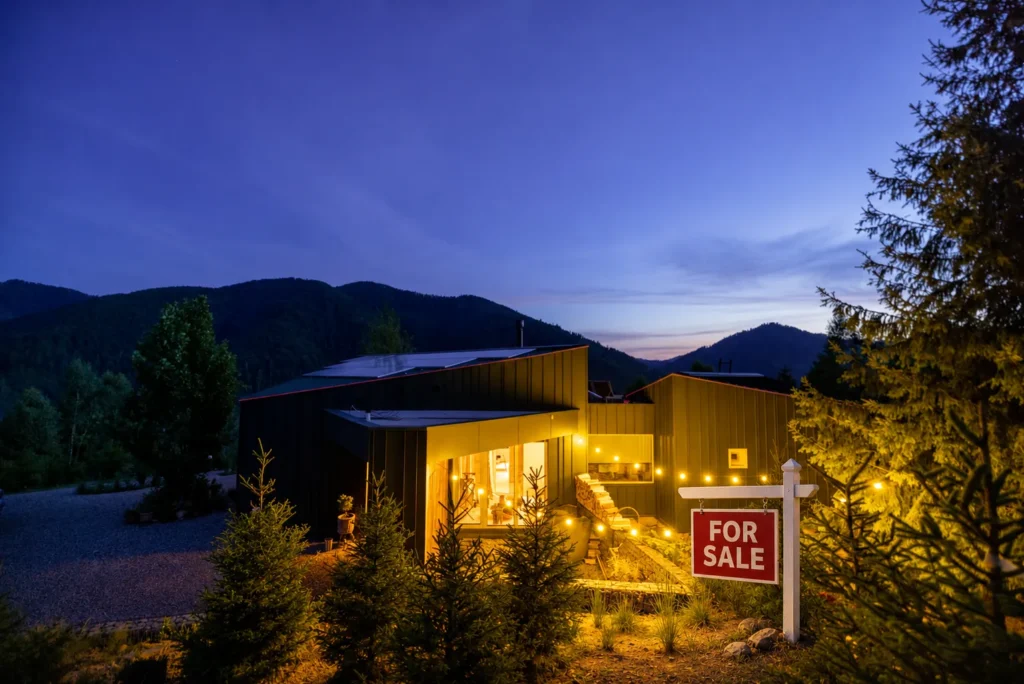
The same house, a different market
“Why isn’t my house selling?” We’ve heard this question at a lot of kitchen tables this year. The property shows well and the photos are good. People come through, say kind things about the view and the barn, and then nothing happens. A few months go by, and the seller starts to wonder what’s wrong with the house.
Usually, nothing is wrong with the house. What has changed is the market around it, and with it, what buyers are willing to overlook.
Here is one we saw recently. A house came to us after sitting unsold with another agent. Before relisting, we thought about the ideal buyer, staged it to highlight its design, and priced it accurately for today’s market. In less than a month, it sold close to the list price.
Fewer buyers, and more careful ones
A few years ago, buyers were competing with each other. If a house had a damp basement or a septic system nobody could date, they made a note and kept going. The next house would have problems too, and someone else might get there first.
That isn’t the market we’re in now. In September, OREA’s numbers put Ontario in buyers’ market territory, with far more homes listed than selling. Hamilton was the same, with sales down about 23% from a year earlier. Homes are staying on the market longer, and buyers know it. They can compare, wait and come back later.
That doesn’t mean nobody is buying at the top end. RE/MAX’s latest luxury report found that sales above $2.4 million in Burlington were up 26% this year. It also found buyers were getting more selective about price, location and quality. The buyers are out there. They’re choosing more carefully, and taking their time doing it.
That matters more for a country property than for a house in town. Fewer people are looking for ten acres, a well and a long driveway than for a four-bedroom on a street. When there are fewer buyers to begin with, each one who walks away counts for more.
Price is the first conversation
Pricing a country property has always been harder than pricing a house in a subdivision. There are fewer sales to compare against, and no two are quite alike. Two five-acre lots on the same road can be worth very different amounts once you count the road frontage, the outbuildings, how much of the land you can actually use, and how much of it the Conservation Authority regulates.
Two things have made it harder this year. The first is memory. Many sellers remember what a neighbour got in 2021 or 2022, and those numbers don’t hold anymore. The second is that buyers now do their own homework. More of them are arriving with their own price research, sometimes put together with online tools, and an offer to match. Some of that research is good, and some of it misses what makes a country property different. Either way, a price that can’t be backed up with real sales gets questioned.
The first few weeks on the market matter most. That’s when a new listing gets the most attention from buyers and their agents. If the price is too high then, the most motivated buyers take a look and move on. By the time the price comes down, many of them have bought something else, and the listing now has a history the next buyer will ask about.
In this market, buyers notice everything
Price is only part of it. The other part is how ready the property is to be bought.
In a busy market, buyers forgave a lot. An old furnace, a roof near the end of its life, a septic system with no paperwork: they’d deal with it later. Now they have time to ask. Every question without an answer turns into a condition on the offer, a lower number, or a reason to look at the next listing.
Country properties come with more questions than most. Many of the buyers looking here are coming from the city and have never lived with a well or a septic system. They aren’t being difficult when they ask. They just don’t know what’s normal yet. These are the things worth having ready before you list:
- Water. A recent water test, the well record, and the flow rate if you have it.
- Septic. How old the system is, when it was last pumped, and any inspection reports.
- The land. Your survey, zoning, any easements, and any Conservation Authority mapping on the property.
- The big systems. Roof, furnace, electrical, and any wood stove or fireplace, with dates and receipts where you have them.
- Outbuildings. What each one is used for, and whether it has power and water.
- The small things. The repairs you’ve been meaning to get to. Buyers count them, and they tend to guess high.
None of this has to be perfect. Buyers want to know the property has been looked after and that there won’t be surprises. A binder with the answers in it does more for that than a fresh coat of paint.
At showings this year, most buyer questions are about price and the condition of the house, and the two are closely linked. Values have come down over the last two to three years, so buyers and their agents are focused on reasonable value for their money. They want a full inspection to avoid surprises, and they want to be sure they’re paying today’s price.
Help the right buyer see themselves there
A country property is usually bought for a reason. Someone needs a workshop. A family wants room for a parent to move in. Someone has horses, or wants to. The listing that sells is the one where that buyer can tell, in the first few seconds, that this place would work for them.
That’s hard to do with a list of room sizes. It helps to be clear about who the property suits and how it works day to day: how far the barn is from the house, which fields are fenced, what the driveway is like in February. Buyers who can’t picture their life there tend to move on, however nice the photos are.
It also matters that buyers can find it. Where a listing shows up online depends partly on how it’s described and categorized, and a country home filed the wrong way can be missed in the searches buyers actually use. If you’re not sure your property is turning up where buyers are looking, it’s worth asking your agent to check.
If your property has been sitting
None of this means a country property won’t sell. Good ones still sell in this market. They tend to be priced from real comparable sales, ready for a careful buyer’s questions, and clear about who they’re for.
If you’re thinking about selling, all three are easier to sort out before you list than after. If your property has been on the market for a while, it’s worth stepping back and looking at all three again with fresh eyes. We’re always glad to sit down and talk it through.
Sources
- Ontario Housing Market Outlook, nesto (OREA data, September 2026)
- Hamilton Housing Market Outlook, nesto (Cornerstone Association of REALTORS data, September 2026)
- REMAX Canada Fall/Winter 2026 Spotlight on Luxury Report